The issue of neat categorization
By Anshul Dhawan, 0→1 Product Builder, product leader, and game developer.
Philosophy · 2025-07
On why categories help us think, and what they quietly leave out.
I recently realized how much of a knack we have for categorizing things in order to understand them. Essentially, we make things simple so we can pattern match more easily.
Categorization helps us simplify complex information, but it often comes with a trade-off: some level of nuance and complexity is lost in the process. When we force things into neat categories, we might overlook details that do not fit into the predefined boxes. This can lead to oversimplification, where we lose the richness of context and the subtle relationships between things that do not fit as easily.
For example, in biology, we categorize species into families, genera, and other ranks, but this sometimes ignores evolutionary anomalies or hybrid species that do not fit perfectly into those categories. Similarly, in human behavior, labeling people as introverts or extroverts can ignore the fluidity and context-specific nature of those traits.
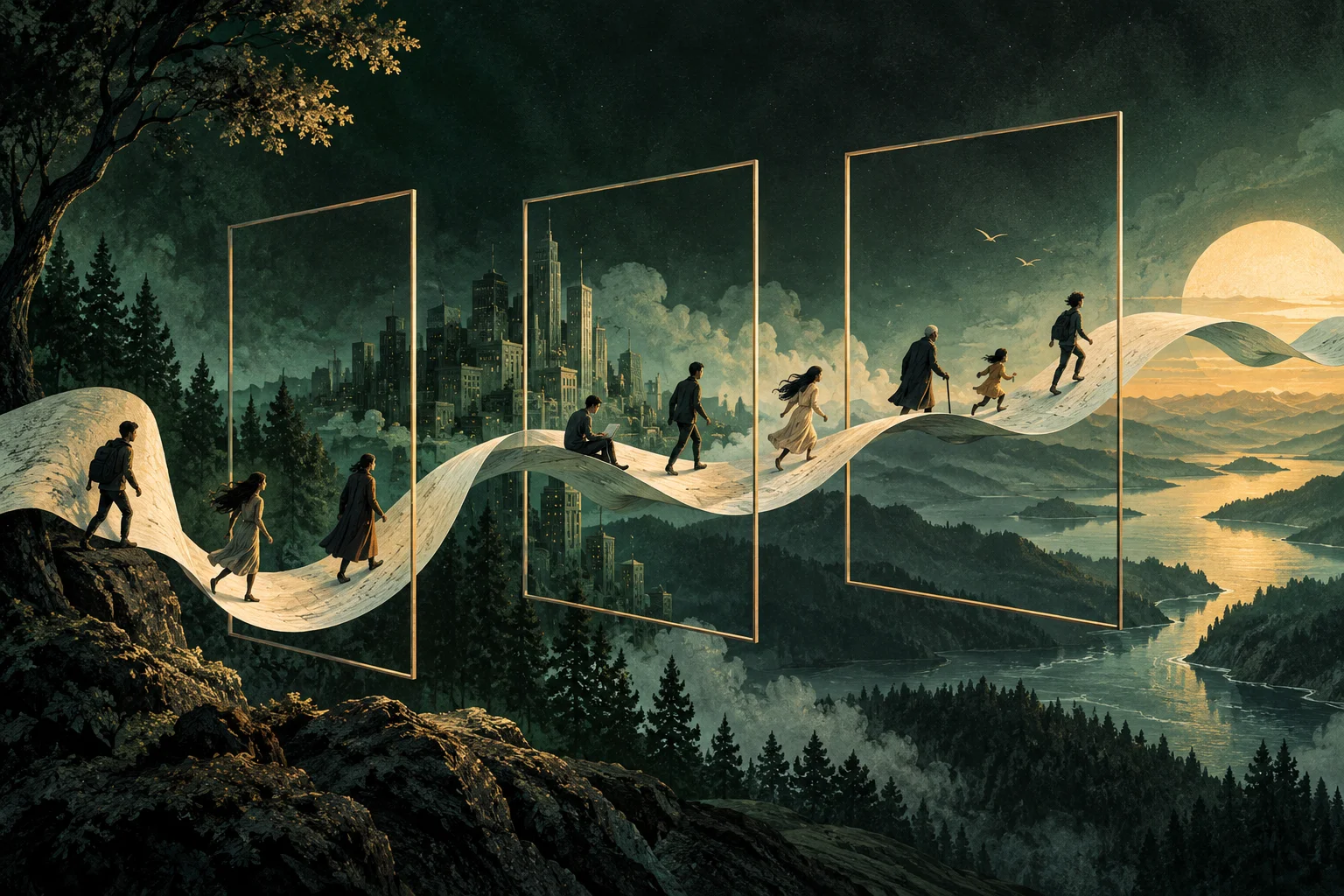
The same problem shows up in medicine. A diagnosis can be useful because it gives doctors a shared language and a known treatment path, but real bodies often contain overlapping symptoms, comorbidities, edge cases, and histories that do not behave like clean textbook entries.
Maps are another example. Borders, neighborhoods, and regions make territory legible, but lived culture rarely stops exactly where a line is drawn. A city can contain many cities inside it, and a language can fade into another through dialects, accents, and local usage instead of switching cleanly from one category to the next.
Culture also resists neat sorting. Music, art, games, and films are grouped into genres so we can find and discuss them, but the most interesting work often lives between genres. Political labels work the same way: they can compress a worldview into a word, while hiding the contradictions, priorities, and context that actually shape a person.
This becomes even sharper in algorithmic systems. Recommendation engines, moderation systems, resumes, ads, and user segments all depend on labels, but a label can mistake convenience for truth. Once the system starts acting on the label, the category can shape the reality it was only supposed to describe.

At the same time, categorization is a natural cognitive tool for making sense of the world around us. It helps us process and recall information more efficiently, even if that efficiency means losing some complexity along the way.